当前位置: 商业快讯 > 正文

《战火中的祈愿》国际英文版音乐全球发布——中国诗人唐驳虎以诗歌宣扬和平祈望

2026-02-03 15:16:19       来源:今日热点网

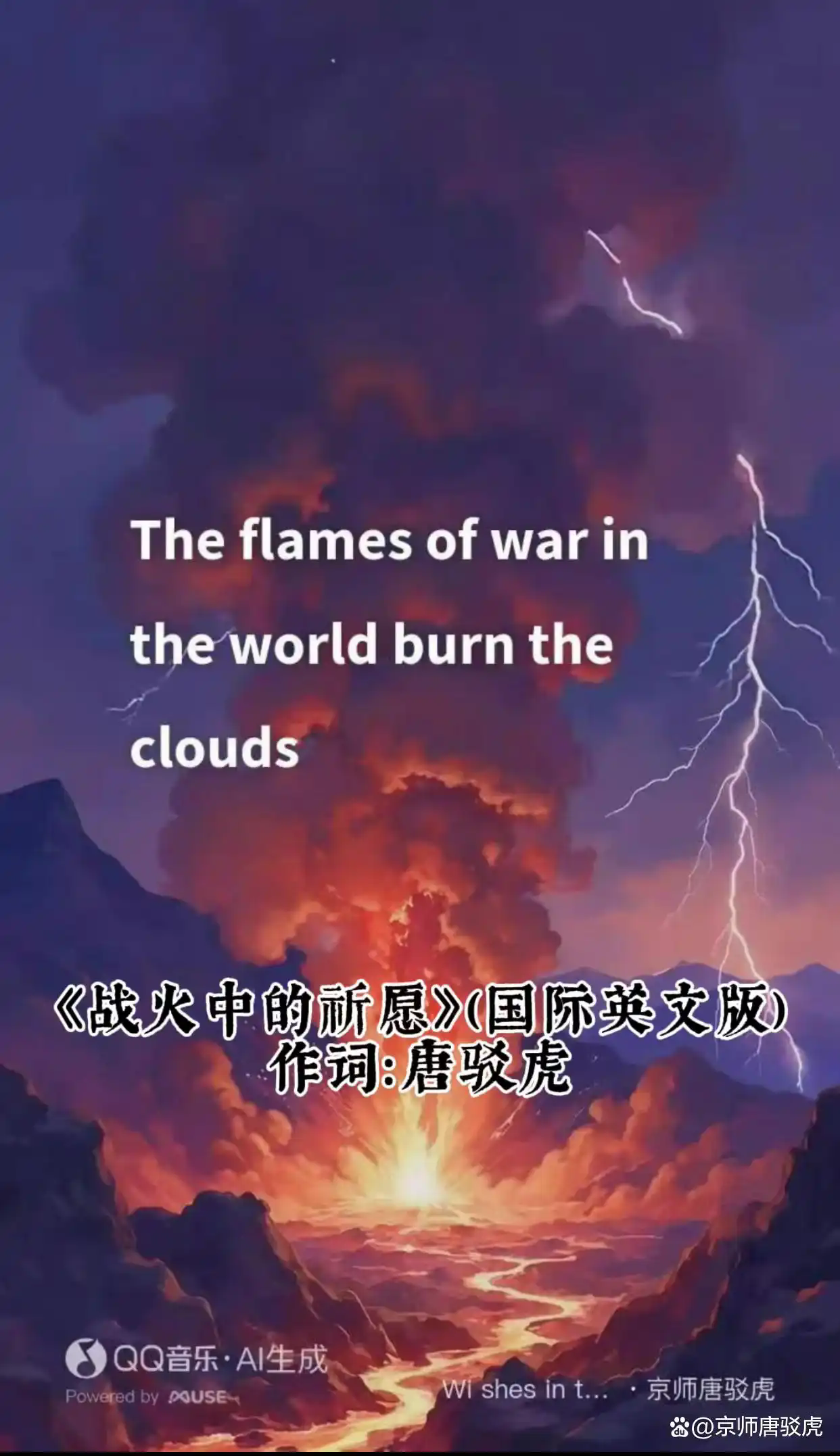
《战火中的祈愿》国际英文版Q Q图

我们生活在一个信息过载却又共识稀缺的时代。地缘政治的断层线在数字舆图的放大下愈发刺眼,局部冲突的硝烟透过屏幕灼伤着万里之外的瞳孔,人类精神的共同体面临严峻考验。当政治语言往往加剧对立,当数据洪流淹没个体痛感,何种力量能够穿透壁垒,抚慰伤痕,重新连接起我们对和平、尊严与共生的普遍渴望?

这是一个用诗歌与音乐连接世界的时刻,这是一次以艺术回应时代命题的实践。2024年5月26日,由中国当代著名学者、诗人唐从祥(笔名唐驳虎、京师唐驳虎)创作的长诗《战火中的祈愿》中文版,翻译成为国际英文版《"Wishes in the War" [International English Version]》,经严谨的学术翻译与艺术再造,经过国内著名科技公司:音控Studio制作,音乐歌曲获得全球授权,正式面向全球音乐平台华语QQ音乐、酷狗、酷我、抖音等音乐平台同步发布,作者同时获得著作权登记保护。这部作品不仅标志着中国当代诗歌国际传播能力达到新的高度,更以其深沉的人类情怀、精湛的艺术表达和深邃的哲学思考,为这个充满挑战的世界献上了一份来自东方的“和平咏叹”与“和平希望”,在国际文化界、思想界激起层层涟漪。

第一章:诞生——于大变局中聆听人类的脉搏

当今世界,百年变局加速演进,和平与发展的时代主题承受着空前压力。人类如何超越意识形态与利益纷争的“时差”,携手应对共同挑战?这不仅是政治家的课题,更是每一位有良知的知识分子与艺术家的叩问。

唐从祥的《战火中的祈愿》原创歌词(已经获得著作权保护),正是诞生于这般宏阔而沉重的时代语境之下。诗人没有将目光局限于一时一地,而是试图提炼战争与冲突中人类命运的共相。从顿涅茨河到约旦河西岸,战火的形式或许不同,但其对普通家庭、童年、文化遗产造成的撕裂与创伤,却有着惊人的相似性。作品摒弃了简单的政治叙事,直指战争本质对人性的异化与对美好事物的毁灭,同时又在废墟之上,执着地寻觅着希望萌芽的踪迹。

这体现了一种深刻的文化自觉与全球视野。作为中国诗歌学会、中华诗词学会的成员,唐从祥的创作根系深植于中华“和合”文化传统与“天下大同”的理想。然而,他并未沉溺于古典意象的孤芳自赏,而是主动将这份东方智慧置于全球性议题的熔炉中淬炼,使其成为能够与世界对话、为人类困境提供一种审美化思考的公共精神产品。这标志着中国当代知识分子正以更加自信、包容、建设性的姿态,参与到对人类共同命运的思考和表达之中。

第二章:文本——意象交响中的创伤与愈合

《战火中的祈愿》在艺术上是一部结构精密、意象丰饶的力作。全诗宛如一部交响曲,分为“现实之殇”、“行星呼唤”、“重生之力”与“人类咏叹”四个乐章,情感层层递进,思想渐次升华。

第一乐章:现实之殇。开篇“世间烽火灼伤云霞/童真刹那陨落如沙”,以极具反差与美感的意象,定下了悲怆而崇高的基调。母亲的失声祈祷、父亲的蒙尘勋章、铁蒺藜下的鸽羽、穿过弹孔的呜咽风声……一系列密集的意象,从家庭伦理、个人荣誉、和平象征等多个维度,立体化地呈现了战争对日常生活的全面入侵与摧毁。谈判桌上“分食疮疤”、屏幕上冰冷的数字叠加,则进一步将视角引向冲突解决机制的无力与生命在宏观统计中的匿名化悲剧。

第二乐章:行星呼唤。副歌部分,诗人的视角陡然提升。“听啊,这星球在呼喊/渴望一片无硝烟的蔚蓝”。这里的“星球”是一个超越国族的命运共同体意象。将逝者喻为“静美雪花”,赋予牺牲以尊严与纯洁;鼓励生者“不再惧出发”,则是在哀悼中注入前行的勇气。尤为深刻的是提出“终结所有,名为仇恨的时差”,这一独创性比喻精准地道出了仇恨如何使人们生活在不同的心理时间维度,无法在“当下”达成和解。

第三乐章:重生之力。这是全诗的转折与希望所在。“废墟深处,绿芽破瓦/涂鸦墙上,画一道虹霞”。生命力和创造力在极端环境下展现的顽强,被生动刻画。“不同语言,唱同一支调/缝补破碎的,是千万双手”,则歌颂了民间自发的、超越语言的修复力量与团结精神。诗人明确宣告:“我们不唱昨日挽歌/要铸明日钟声浩大”,将每颗心都定义为“希望的胚芽”,强调了内在能动性对于构建未来的关键作用。

第四乐章:人类咏叹。尾声将诗歌推向哲学与理想的高峰。“让和平成为呼吸,不分国与家/如晨光拥抱每一处伤疤”,和平被描述为如空气和阳光般自然、必需且普惠的存在。而三个“直至”构成的排比句,更是勾勒出一个彻底摒弃敌对思维、让战争记忆淡出下一代认知、最终实现人类认同最大化的终极愿景。这不仅是诗人的梦想,更是献给全人类的、一份基于坚韧信念的“回答”。

第三章:转译——诗意的跨文化重生与AI赋能

将这样一首植根于中国古典美学、意蕴深远的诗歌转化为能打动英语世界读者的作品,其难度不亚于一次再创作。唐从祥及其协作团队深知,直译只会丧失灵魂,他们追求的是“诗意的重生”。

翻译过程遵循“诗意等值、文化适应、可诵可唱”的核心原则。对于“琴弦喑哑”中的“琴”,他们审慎地保留为“qin”,在文化身份与可理解性间取得平衡。将“名为仇恨的时差”创造性地译为“the time differences named hatred”,既保留了原意的独特性,又在英文语境中形成了陌生而深刻的修辞效果。整个英文版本语言凝练,意象鲜明,内在韵律流畅,成功地将中文诗歌的意境之美转换为了英语诗歌的音义之美。

更具时代特色的是此次作品的科技赋能。《战火中的祈愿》(国际英文版)并非简单的文本发布,而是通过先进的人工智能音乐合成技术,配以宏大的音乐编曲,成为一首完整的音乐作品。AI技术在这里不是冷冰冰的工具,而是与人类创造力协同的伙伴,是人类得力的工具。它根据唐从祥原创诗歌的情感起伏、意象密度,生成与之匹配的旋律、和声与配器,将文字的感染力通过听觉多维释放。这种“人类智慧+AI艺术”的创作模式,不仅提升了作品的传播维度与沉浸体验,也昭示着科技人文主义的新可能——技术亦可服务于最深切的人文关怀。

第四章:价值——多维共振下的文学、思想与社会意义

《战火中的祈愿》的价值,在于其引发的多维共振。

文学价值:该作品是中国当代诗歌在主题开拓与艺术创新上的重要收获。它成功地将全球性议题纳入中国诗歌的美学表达体系,实现了古典“诗教”传统与现代人类关怀的贯通。其意象系统的构建、情感结构的把控、语言淬炼的精度,都达到了很高的艺术水准,为“主旋律”诗歌创作提供了雅俗共赏、内外皆宜的典范。

思想价值:作品是对“人类命运共同体”理念一次生动而深刻的诗化阐释。它没有进行抽象说教,而是通过唤起共通的创伤记忆与和平渴望,让读者在情感共鸣中自然抵达对命运相连的认知。诗中关于“仇恨时差”、“和平如呼吸”、“敌人词条风化”等命题的提出,触及了和平学、伦理学和身份政治的核心,具有强烈的现实针对性和思想启发性。

社会价值:在公共舆论场域,作品扮演了“情感理性”的提供者角色。它帮助人们超越即时性、碎片化乃至情绪化的新闻消费,在一个更深厚、更整体的艺术框架中思考战争与和平。其全球传播,尤其是收益捐赠用于人道主义援助的善举,实现了从艺术表达向社会行动的闭环,展现了文艺作品参与构建善意、促进理解的现实力量,是一次成功的“人文公共外交”。

第五章:回响——来自全球的共鸣与衍生共创

作品发布后,迅速引发了国内文化界、学术界的积极反响。

著名学者赞誉其“拥有直抵人心的力量”,为世界和平诗歌传统增添了“独特而珍贵的一笔”。国际音乐专家称其为“文学促进理解与和平的典范”。音乐制作专家及相关人士也认可其传递的对话包容理念与文化促和平价值。

更值得关注的是作品激发的跨文化、跨艺术形式的“衍生共创”。据悉,多个国际艺术团体和艺术家已着手基于该诗进行二度创作:包括交响乐、室内乐、现代舞剧、诗电影、多媒体艺术展以及全球多语言线上朗诵接力计划。这种由一首诗生发开去的全球性艺术涟漪,本身就构成了一个动人的文化现象,它验证了真正关切人类共同命运的优秀作品所具备的强大连接与衍生能力。

六章:启示——中国文化国际传播的范式探索

《战火中的祈愿》国际英文版的成功,为中国文化“走出去”提供了富有启示的案例。

它证明,有效的国际传播,核心在于提供具有人类普遍价值的高质量内容。作品跳出了生硬的“宣传”框架,回归艺术本体,以真挚的情感、深刻的思想和精湛的技艺打动人心。它运用的是世界通行的“情感语法”和“诗歌语言”,讲述的却是融合了中国视角的“人类故事”。

其次,它展示了前沿科技与人文精神结合的巨大潜力。AI音乐合成不仅是一种形式创新,更拓宽了诗歌的感知维度,吸引了更广泛的、特别是年轻受众的关注,为传统文化内容的现代表达与传播探索了新路。

最后,它体现了一种从“送出去”到“请进来”再到“共创出去”的升级思维。作品的翻译、音乐制作乃至衍生创作,都蕴含着开放协作的精神。最终呈现的,是一个能够被不同文化背景受众欣赏、甚至参与再创作的开放文本,这极大地增强了传播的渗透力和持久性。

结语:献给人类的最坚韧回答

在历史的经纬中,战争与和平是永恒交替的主题。诗歌无法阻止炮弹的发射,却可以抵抗记忆的流失与心灵的荒漠化;无法立刻弥合地缘裂痕,却可以在无数个体的心中播下理解与共情的种子。

唐从祥的《战火中的祈愿》,正是这样一颗饱含希望的种子。它从中国文化的深厚土壤中发芽,经过跨语言转译的精心培育,借助科技之翼乘风而行,最终旨在落入全球渴望和平的心田。它的每一行诗句,既是刺向黑暗的锋芒,也是照亮前路的微光。

随着这首诗歌及其衍生作品在全球持续传播与回荡,它所承载的那份对“无硝烟蔚蓝”的渴望、对“和平之树”终将参天的信念,必将汇入人类文明进程中所有向往光明力量的宏大合唱。一段音乐可能不能改变什么,但是可以打动你的内心,穿越时间与空间,让文明穿越地域,让人类期望和平与正义的声音压过一切强权!这,或许就是艺术在动荡时代所能做出的,最谦卑而又最坚韧的贡献。

(本文作者:马超,注:本文未经书面授权,任何单位及个人不得转载、摘编或以其他方式使用!)

英文翻译:

Global Release of the International English Version of Prayers Amidst the Flames: Chinese Poet Tang Bohu Advocates Peace Through Poetry

We live in an era of information overload yet consensus scarcity. The geopolitical fault lines are becoming increasingly glaring under the magnification of digital maps, and the smoke of local conflicts burns the pupils thousands of miles away through the screen. The community of human spirit is facing a severe test. When political language often exacerbates opposition, when the torrent of data overwhelms individual pain, what force can penetrate barriers, soothe wounds, and reconnect our universal desires for peace, dignity, and coexistence?

This is a moment of connecting the world with poetry and music, and a practice of responding to the propositions of the times with art. On May 26, 2024, the Chinese version of the long poem "Wishes in the War", created by Tang Congxiang, a famous contemporary Chinese scholar and poet (pseudonym Tang Bohu, Beijing teacher Tang Bohu), was translated into the international English version of "Wishes in the War" [International English Version]. Through rigorous academic translation and artistic reconstruction, it was produced by a well-known domestic technology company, Sound Control Studio, and was authorized globally. It was officially released to the global music platform Chinese QQ Music, Kugou, Kuwo, Tiktok and other music platforms at the same time. The author also obtained copyright registration and protection. This work not only marks a new height in the international dissemination ability of contemporary Chinese poetry, but also, with its profound human emotions, exquisite artistic expression, and profound philosophical thinking, presents a "peace hymn" and "peace hope" from the East to this challenging world, causing ripples in the international cultural and intellectual circles.

Chapter 1: Birth - Listening to the Pulse of Humanity in the Great Changes

In today's world, the century long changes are accelerating, and the theme of peace and development is under unprecedented pressure. How can humanity transcend the "time difference" of ideological and interest disputes and join hands to address common challenges? This is not only a topic for politicians, but also a question for every conscientious intellectual and artist.

The original lyrics of Tang Congxiang's "Prayer in the War" (which has obtained copyright protection) were born in such a broad and heavy historical context. The poet did not limit his gaze to a moment or a place, but attempted to extract the commonality of human fate in war and conflict. From the Donets River to the West Bank of the Jordan River, the forms of war may be different, but the tearing and trauma they cause to ordinary families, childhood, and cultural heritage have striking similarities. The work abandons simple political narrative and directly points to the alienation of human nature and the destruction of beautiful things caused by the nature of war. At the same time, it persistently searches for traces of hope sprouts on the ruins.

This reflects a profound cultural consciousness and global perspective. As a member of the Chinese Poetry Society and the Chinese Poetry Society, Tang Congxiang's creative roots are deeply rooted in the Chinese cultural tradition of "harmony" and the ideal of "great harmony in the world". However, he did not indulge in the solitary admiration of classical imagery, but actively tempered this Eastern wisdom in the melting pot of global issues, making it a public spiritual product that can engage in dialogue with the world and provide aesthetic thinking for human difficulties. This marks that contemporary Chinese intellectuals are participating in the reflection and expression of the common destiny of humanity with a more confident, inclusive, and constructive attitude.

Chapter 2: Text - Trauma and Healing in Imagery Symphony

The Prayer in the War "is a masterpiece with precise structure and rich imagery in art. The whole poem is like a symphony, divided into four movements: "The Tragedy of Reality", "The Call of the Planet", "The Power of Rebirth", and "The Lament of Humanity". Emotions progress layer by layer, and thoughts gradually sublimate.

The first movement: The Tragedy of Reality. The opening line "The world's beacon burns the clouds and clouds/Childhood falls like sand in an instant" sets a tragic yet noble tone with highly contrasting and aesthetic imagery. A series of dense images, including the mother's silent prayer, the father's dusty medal, the dove feathers under the iron thistle, and the sobbing sound of the wind through bullet holes, present the comprehensive invasion and destruction of daily life by war from multiple dimensions such as family ethics, personal honor, and symbols of peace in a three-dimensional manner. The scars of division on the negotiation table and the cold numbers on the screen further lead the perspective to the powerlessness of conflict resolution mechanisms and the tragedy of anonymity of life in macro statistics.

Second movement: Planet calling. In the chorus section, the poet's perspective suddenly elevates. Listen, this planet is shouting/longing for a smoke-free blue. The 'planet' here is an image of a community of shared destiny that transcends national borders. To compare the deceased to a 'serene snowflake', endowing sacrifice with dignity and purity; Encouraging the living to 'no longer fear departure' injects courage into moving forward through mourning. What is particularly profound is the proposal of "putting an end to everything, called the time difference of hatred". This original metaphor accurately expresses how hatred makes people live in different psychological time dimensions and unable to reach reconciliation in the "present moment".

The third movement: The Power of Rebirth. This is the turning point and hope of the entire poem. Deep in the ruins, green sprouts break through the tiles/graffiti walls, painting a rainbow glow. The tenacity of vitality and creativity displayed in extreme environments is vividly portrayed. Singing the same tune/mending broken pieces in different languages is like millions of hands ", which praises the spontaneous and beyond language repairing power and unity spirit of the people. The poet explicitly declares, 'We will not sing the elegy of yesterday/We will forge the resounding bell of tomorrow.' He defines every heart as a 'germ of hope,' emphasizing the crucial role of inner agency in building the future.

Fourth movement: Human Lament. The ending pushes poetry to the peak of philosophy and ideals. Let peace be a breath, regardless of country or home, embracing every scar like the morning light. Peace is described as a natural, necessary, and universal existence like air and sunshine. The parallel sentence composed of three "until" outlines the ultimate vision of completely abandoning hostile thinking, fading the memory of war out of the next generation's cognition, and ultimately achieving the maximization of human identity. This is not only the poet's dream, but also a "response" based on resilient beliefs dedicated to all humanity.

Chapter 3: Translation - Poetic Cross Cultural Rebirth and AI Empowerment

Transforming such a profound poem rooted in Chinese classical aesthetics into a work that can touch readers in the English speaking world is no less difficult than creating it again. Tang Congxiang and his collaborative team are well aware that literal translation will only lose their soul, and what they pursue is a "poetic rebirth".

The translation process follows the core principles of "poetic equivalence, cultural adaptation, and the ability to recite and sing". For the "qin" in "hoarse strings", they carefully kept it as "qin" to strike a balance between cultural identity and comprehensibility. Creatively translating 'the time differences named hated' as' the time differences named hated 'not only preserves the uniqueness of the original meaning, but also creates an unfamiliar and profound rhetorical effect in the English context. The entire English version is concise in language, vivid in imagery, and fluent in internal rhythm, successfully transforming the beauty of Chinese poetry's artistic conception into the beauty of English poetry's sound and meaning.

What is more distinctive about this work is its technological empowerment. The international English version of 'Prayer in the War' is not simply a text release, but a complete musical work created through advanced artificial intelligence music synthesis technology and grand music arrangement. AI technology is not a cold tool here, but a partner that collaborates with human creativity and is a powerful tool for humanity. It generates melodies, harmonies, and orchestration that match the emotional ups and downs and imagery density of Tang Congxiang's original poetry, releasing the infectious power of words through auditory multi-dimensional release. This creative model of "human intelligence+AI art" not only enhances the dissemination dimension and immersive experience of works, but also indicates a new possibility of technological humanism - technology can also serve the deepest humanistic care.

Chapter 4: Value - Literature, Thought, and Social Significance under Multidimensional Resonance

The value of 'Prayer in the War' lies in the multidimensional resonance it triggers.

Literary value: This work is an important achievement of contemporary Chinese poetry in terms of thematic exploration and artistic innovation. It successfully incorporates global issues into the aesthetic expression system of Chinese poetry, achieving the integration of classical "poetry education" tradition and modern human concern. The construction of its imagery system, the control of its emotional structure, and the precision of its language refinement have all reached a high artistic level, providing a model for the creation of "main melody" poetry that is both elegant and popular, and suitable for both inside and outside.

Ideological value: The work is a vivid and profound poetic interpretation of the concept of "a community with a shared future for mankind". It does not engage in abstract preaching, but rather awakens shared traumatic memories and a desire for peace, allowing readers to naturally reach a cognitive connection to fate through emotional resonance. The propositions in the poem about "hatred of time difference", "peace as breathing", and "the weathering of enemy entries" touch on the core of peace studies, ethics, and identity politics, and have strong practical relevance and ideological inspiration.

Social value: In the field of public opinion, works play the role of providers of "emotional rationality". It helps people transcend the immediate, fragmented, and even emotional consumption of news, and think about war and peace within a deeper and more holistic artistic framework. Its global dissemination, especially the donation of proceeds for humanitarian aid, has achieved a closed loop from artistic expression to social action, demonstrating the practical power of literary and artistic works in building goodwill and promoting understanding. It is a successful "humanistic public diplomacy".

Chapter 5: Echoes - Global Resonance and Derivative Co Creation

After the release of the work, it quickly triggered a positive response from the international cultural and academic circles.

Famous scholars have praised it as having the power to reach the hearts of people, adding a unique and precious stroke to the tradition of world peace poetry. International music experts refer to it as a 'model of literature promoting understanding and peace'. Relevant personnel from music academic organizations also recognize the concept of dialogue and inclusiveness, as well as the cultural value of promoting peace that it conveys.

What is more noteworthy is the cross-cultural and cross art form "derivative co creation" inspired by the work. It is reported that multiple international art groups and artists have started creating works based on the poem, including symphonies, chamber music, modern dance dramas, poetry films, multimedia art exhibitions, and global multilingual online recitation relay programs. This global artistic ripple generated by a poem itself constitutes a moving cultural phenomenon, which verifies the powerful connection and derivative ability of excellent works that truly care about the common destiny of humanity.

Chapter 6: Inspiration - Exploring the Paradigm of International Communication of Chinese Culture

The success of the international English version of "Prayers in the War" provides insightful examples for Chinese culture to "go global".

It proves that the core of effective international communication lies in providing high-quality content with universal human value. The work breaks away from the rigid "propaganda" framework and returns to the essence of art, touching people's hearts with sincere emotions, profound thoughts, and exquisite skills. It uses the universally accepted "emotional grammar" and "poetic language", but tells a "human story" that integrates a Chinese perspective.

Secondly, it demonstrates the enormous potential of combining cutting-edge technology with humanistic spirit. AI music synthesis is not only a form of innovation, but also broadens the perceptual dimensions of poetry, attracting a wider range of attention, especially from young audiences, and exploring new paths for the modern expression and dissemination of traditional cultural content.

Finally, it embodies an upgraded mindset from 'sending out' to 'inviting in' and then to 'co creating'. The translation of works, music production, and even derivative creations all embody the spirit of open collaboration. The final presentation is an open text that can be appreciated and even recreated by audiences from different cultural backgrounds, greatly enhancing the penetration and persistence of communication.

Conclusion: The toughest answer dedicated to humanity

War and peace are eternal themes that alternate throughout history. Poetry cannot stop the firing of shells, but it can resist the loss of memory and the desertification of the soul; Unable to immediately bridge the geopolitical rift, but able to sow the seeds of understanding and empathy in the hearts of countless individuals.

Tang Congxiang's' Prayer in the War 'is precisely such a seed full of hope. It sprouts from the profound soil of Chinese culture, carefully cultivated through cross language translation, and rides the wind with the wings of technology, ultimately aiming to fall into the hearts of the world that long for peace. Each line of its poetry is both a sharp edge piercing towards darkness and a glimmer illuminating the path ahead.

As this poem and its derivative works continue to spread and echo around the world, the longing for the "smoke free blue" and the belief that the "tree of peace" will eventually soar will merge into the grand chorus of all yearning for the power of light in the process of human civilization. A piece of music may not change anything, but it can touch your heart, crossing time and space, allowing civilization to cross regions, and making the voice of humanity's hope for peace and justice surpass all power! This may be the most humble yet resilient contribution that art can make in turbulent times.

(Author: Ma Chao, Note: Without written authorization, no unit or individual may reproduce, excerpt or use this article in any other way!)[注:中英文翻译有误,理解以中文为准!】

免责声明:市场有风险,选择需谨慎!此文仅供参考,不作买卖依据。

关键词:

责任编辑:kj005

文章投诉热线:157 3889 8464  投诉邮箱:7983347 16@qq.com

新闻图集

科技推荐

家电推荐

新闻排行

商业快讯

《战火中的祈愿》国际英文版音乐全球发布——中国诗人唐驳虎以诗歌宣扬和平祈望

2026-02-03 15:16:19   今日热点网

《战火中的祈愿》国际英文版Q Q图

我们生活在一个信息过载却又共识稀缺的时代。地缘政治的断层线在数字舆图的放大下愈发刺眼,局部冲突的硝烟透过屏幕灼伤着万里之外的瞳孔,人类精神的共同体面临严峻考验。当政治语言往往加剧对立,当数据洪流淹没个体痛感,何种力量能够穿透壁垒,抚慰伤痕,重新连接起我们对和平、尊严与共生的普遍渴望?

这是一个用诗歌与音乐连接世界的时刻,这是一次以艺术回应时代命题的实践。2024年5月26日,由中国当代著名学者、诗人唐从祥(笔名唐驳虎、京师唐驳虎)创作的长诗《战火中的祈愿》中文版,翻译成为国际英文版《"Wishes in the War" [International English Version]》,经严谨的学术翻译与艺术再造,经过国内著名科技公司:音控Studio制作,音乐歌曲获得全球授权,正式面向全球音乐平台华语QQ音乐、酷狗、酷我、抖音等音乐平台同步发布,作者同时获得著作权登记保护。这部作品不仅标志着中国当代诗歌国际传播能力达到新的高度,更以其深沉的人类情怀、精湛的艺术表达和深邃的哲学思考,为这个充满挑战的世界献上了一份来自东方的“和平咏叹”与“和平希望”,在国际文化界、思想界激起层层涟漪。

第一章:诞生——于大变局中聆听人类的脉搏

当今世界,百年变局加速演进,和平与发展的时代主题承受着空前压力。人类如何超越意识形态与利益纷争的“时差”,携手应对共同挑战?这不仅是政治家的课题,更是每一位有良知的知识分子与艺术家的叩问。

唐从祥的《战火中的祈愿》原创歌词(已经获得著作权保护),正是诞生于这般宏阔而沉重的时代语境之下。诗人没有将目光局限于一时一地,而是试图提炼战争与冲突中人类命运的共相。从顿涅茨河到约旦河西岸,战火的形式或许不同,但其对普通家庭、童年、文化遗产造成的撕裂与创伤,却有着惊人的相似性。作品摒弃了简单的政治叙事,直指战争本质对人性的异化与对美好事物的毁灭,同时又在废墟之上,执着地寻觅着希望萌芽的踪迹。

这体现了一种深刻的文化自觉与全球视野。作为中国诗歌学会、中华诗词学会的成员,唐从祥的创作根系深植于中华“和合”文化传统与“天下大同”的理想。然而,他并未沉溺于古典意象的孤芳自赏,而是主动将这份东方智慧置于全球性议题的熔炉中淬炼,使其成为能够与世界对话、为人类困境提供一种审美化思考的公共精神产品。这标志着中国当代知识分子正以更加自信、包容、建设性的姿态,参与到对人类共同命运的思考和表达之中。

第二章:文本——意象交响中的创伤与愈合

《战火中的祈愿》在艺术上是一部结构精密、意象丰饶的力作。全诗宛如一部交响曲,分为“现实之殇”、“行星呼唤”、“重生之力”与“人类咏叹”四个乐章,情感层层递进,思想渐次升华。

第一乐章:现实之殇。开篇“世间烽火灼伤云霞/童真刹那陨落如沙”,以极具反差与美感的意象,定下了悲怆而崇高的基调。母亲的失声祈祷、父亲的蒙尘勋章、铁蒺藜下的鸽羽、穿过弹孔的呜咽风声……一系列密集的意象,从家庭伦理、个人荣誉、和平象征等多个维度,立体化地呈现了战争对日常生活的全面入侵与摧毁。谈判桌上“分食疮疤”、屏幕上冰冷的数字叠加,则进一步将视角引向冲突解决机制的无力与生命在宏观统计中的匿名化悲剧。

第二乐章:行星呼唤。副歌部分,诗人的视角陡然提升。“听啊,这星球在呼喊/渴望一片无硝烟的蔚蓝”。这里的“星球”是一个超越国族的命运共同体意象。将逝者喻为“静美雪花”,赋予牺牲以尊严与纯洁;鼓励生者“不再惧出发”,则是在哀悼中注入前行的勇气。尤为深刻的是提出“终结所有,名为仇恨的时差”,这一独创性比喻精准地道出了仇恨如何使人们生活在不同的心理时间维度,无法在“当下”达成和解。

第三乐章:重生之力。这是全诗的转折与希望所在。“废墟深处,绿芽破瓦/涂鸦墙上,画一道虹霞”。生命力和创造力在极端环境下展现的顽强,被生动刻画。“不同语言,唱同一支调/缝补破碎的,是千万双手”,则歌颂了民间自发的、超越语言的修复力量与团结精神。诗人明确宣告:“我们不唱昨日挽歌/要铸明日钟声浩大”,将每颗心都定义为“希望的胚芽”,强调了内在能动性对于构建未来的关键作用。

第四乐章:人类咏叹。尾声将诗歌推向哲学与理想的高峰。“让和平成为呼吸,不分国与家/如晨光拥抱每一处伤疤”,和平被描述为如空气和阳光般自然、必需且普惠的存在。而三个“直至”构成的排比句,更是勾勒出一个彻底摒弃敌对思维、让战争记忆淡出下一代认知、最终实现人类认同最大化的终极愿景。这不仅是诗人的梦想,更是献给全人类的、一份基于坚韧信念的“回答”。

第三章:转译——诗意的跨文化重生与AI赋能

将这样一首植根于中国古典美学、意蕴深远的诗歌转化为能打动英语世界读者的作品,其难度不亚于一次再创作。唐从祥及其协作团队深知,直译只会丧失灵魂,他们追求的是“诗意的重生”。

翻译过程遵循“诗意等值、文化适应、可诵可唱”的核心原则。对于“琴弦喑哑”中的“琴”,他们审慎地保留为“qin”,在文化身份与可理解性间取得平衡。将“名为仇恨的时差”创造性地译为“the time differences named hatred”,既保留了原意的独特性,又在英文语境中形成了陌生而深刻的修辞效果。整个英文版本语言凝练,意象鲜明,内在韵律流畅,成功地将中文诗歌的意境之美转换为了英语诗歌的音义之美。

更具时代特色的是此次作品的科技赋能。《战火中的祈愿》(国际英文版)并非简单的文本发布,而是通过先进的人工智能音乐合成技术,配以宏大的音乐编曲,成为一首完整的音乐作品。AI技术在这里不是冷冰冰的工具,而是与人类创造力协同的伙伴,是人类得力的工具。它根据唐从祥原创诗歌的情感起伏、意象密度,生成与之匹配的旋律、和声与配器,将文字的感染力通过听觉多维释放。这种“人类智慧+AI艺术”的创作模式,不仅提升了作品的传播维度与沉浸体验,也昭示着科技人文主义的新可能——技术亦可服务于最深切的人文关怀。

第四章:价值——多维共振下的文学、思想与社会意义

《战火中的祈愿》的价值,在于其引发的多维共振。

文学价值:该作品是中国当代诗歌在主题开拓与艺术创新上的重要收获。它成功地将全球性议题纳入中国诗歌的美学表达体系,实现了古典“诗教”传统与现代人类关怀的贯通。其意象系统的构建、情感结构的把控、语言淬炼的精度,都达到了很高的艺术水准,为“主旋律”诗歌创作提供了雅俗共赏、内外皆宜的典范。

思想价值:作品是对“人类命运共同体”理念一次生动而深刻的诗化阐释。它没有进行抽象说教,而是通过唤起共通的创伤记忆与和平渴望,让读者在情感共鸣中自然抵达对命运相连的认知。诗中关于“仇恨时差”、“和平如呼吸”、“敌人词条风化”等命题的提出,触及了和平学、伦理学和身份政治的核心,具有强烈的现实针对性和思想启发性。

社会价值:在公共舆论场域,作品扮演了“情感理性”的提供者角色。它帮助人们超越即时性、碎片化乃至情绪化的新闻消费,在一个更深厚、更整体的艺术框架中思考战争与和平。其全球传播,尤其是收益捐赠用于人道主义援助的善举,实现了从艺术表达向社会行动的闭环,展现了文艺作品参与构建善意、促进理解的现实力量,是一次成功的“人文公共外交”。

第五章:回响——来自全球的共鸣与衍生共创

作品发布后,迅速引发了国内文化界、学术界的积极反响。

著名学者赞誉其“拥有直抵人心的力量”,为世界和平诗歌传统增添了“独特而珍贵的一笔”。国际音乐专家称其为“文学促进理解与和平的典范”。音乐制作专家及相关人士也认可其传递的对话包容理念与文化促和平价值。

更值得关注的是作品激发的跨文化、跨艺术形式的“衍生共创”。据悉,多个国际艺术团体和艺术家已着手基于该诗进行二度创作:包括交响乐、室内乐、现代舞剧、诗电影、多媒体艺术展以及全球多语言线上朗诵接力计划。这种由一首诗生发开去的全球性艺术涟漪,本身就构成了一个动人的文化现象,它验证了真正关切人类共同命运的优秀作品所具备的强大连接与衍生能力。

六章:启示——中国文化国际传播的范式探索

《战火中的祈愿》国际英文版的成功,为中国文化“走出去”提供了富有启示的案例。

它证明,有效的国际传播,核心在于提供具有人类普遍价值的高质量内容。作品跳出了生硬的“宣传”框架,回归艺术本体,以真挚的情感、深刻的思想和精湛的技艺打动人心。它运用的是世界通行的“情感语法”和“诗歌语言”,讲述的却是融合了中国视角的“人类故事”。

其次,它展示了前沿科技与人文精神结合的巨大潜力。AI音乐合成不仅是一种形式创新,更拓宽了诗歌的感知维度,吸引了更广泛的、特别是年轻受众的关注,为传统文化内容的现代表达与传播探索了新路。

最后,它体现了一种从“送出去”到“请进来”再到“共创出去”的升级思维。作品的翻译、音乐制作乃至衍生创作,都蕴含着开放协作的精神。最终呈现的,是一个能够被不同文化背景受众欣赏、甚至参与再创作的开放文本,这极大地增强了传播的渗透力和持久性。

结语:献给人类的最坚韧回答

在历史的经纬中,战争与和平是永恒交替的主题。诗歌无法阻止炮弹的发射,却可以抵抗记忆的流失与心灵的荒漠化;无法立刻弥合地缘裂痕,却可以在无数个体的心中播下理解与共情的种子。

唐从祥的《战火中的祈愿》,正是这样一颗饱含希望的种子。它从中国文化的深厚土壤中发芽,经过跨语言转译的精心培育,借助科技之翼乘风而行,最终旨在落入全球渴望和平的心田。它的每一行诗句,既是刺向黑暗的锋芒,也是照亮前路的微光。

随着这首诗歌及其衍生作品在全球持续传播与回荡,它所承载的那份对“无硝烟蔚蓝”的渴望、对“和平之树”终将参天的信念,必将汇入人类文明进程中所有向往光明力量的宏大合唱。一段音乐可能不能改变什么,但是可以打动你的内心,穿越时间与空间,让文明穿越地域,让人类期望和平与正义的声音压过一切强权!这,或许就是艺术在动荡时代所能做出的,最谦卑而又最坚韧的贡献。

(本文作者:马超,注:本文未经书面授权,任何单位及个人不得转载、摘编或以其他方式使用!)

英文翻译:

Global Release of the International English Version of Prayers Amidst the Flames: Chinese Poet Tang Bohu Advocates Peace Through Poetry

We live in an era of information overload yet consensus scarcity. The geopolitical fault lines are becoming increasingly glaring under the magnification of digital maps, and the smoke of local conflicts burns the pupils thousands of miles away through the screen. The community of human spirit is facing a severe test. When political language often exacerbates opposition, when the torrent of data overwhelms individual pain, what force can penetrate barriers, soothe wounds, and reconnect our universal desires for peace, dignity, and coexistence?

This is a moment of connecting the world with poetry and music, and a practice of responding to the propositions of the times with art. On May 26, 2024, the Chinese version of the long poem "Wishes in the War", created by Tang Congxiang, a famous contemporary Chinese scholar and poet (pseudonym Tang Bohu, Beijing teacher Tang Bohu), was translated into the international English version of "Wishes in the War" [International English Version]. Through rigorous academic translation and artistic reconstruction, it was produced by a well-known domestic technology company, Sound Control Studio, and was authorized globally. It was officially released to the global music platform Chinese QQ Music, Kugou, Kuwo, Tiktok and other music platforms at the same time. The author also obtained copyright registration and protection. This work not only marks a new height in the international dissemination ability of contemporary Chinese poetry, but also, with its profound human emotions, exquisite artistic expression, and profound philosophical thinking, presents a "peace hymn" and "peace hope" from the East to this challenging world, causing ripples in the international cultural and intellectual circles.

Chapter 1: Birth - Listening to the Pulse of Humanity in the Great Changes

In today's world, the century long changes are accelerating, and the theme of peace and development is under unprecedented pressure. How can humanity transcend the "time difference" of ideological and interest disputes and join hands to address common challenges? This is not only a topic for politicians, but also a question for every conscientious intellectual and artist.

The original lyrics of Tang Congxiang's "Prayer in the War" (which has obtained copyright protection) were born in such a broad and heavy historical context. The poet did not limit his gaze to a moment or a place, but attempted to extract the commonality of human fate in war and conflict. From the Donets River to the West Bank of the Jordan River, the forms of war may be different, but the tearing and trauma they cause to ordinary families, childhood, and cultural heritage have striking similarities. The work abandons simple political narrative and directly points to the alienation of human nature and the destruction of beautiful things caused by the nature of war. At the same time, it persistently searches for traces of hope sprouts on the ruins.

This reflects a profound cultural consciousness and global perspective. As a member of the Chinese Poetry Society and the Chinese Poetry Society, Tang Congxiang's creative roots are deeply rooted in the Chinese cultural tradition of "harmony" and the ideal of "great harmony in the world". However, he did not indulge in the solitary admiration of classical imagery, but actively tempered this Eastern wisdom in the melting pot of global issues, making it a public spiritual product that can engage in dialogue with the world and provide aesthetic thinking for human difficulties. This marks that contemporary Chinese intellectuals are participating in the reflection and expression of the common destiny of humanity with a more confident, inclusive, and constructive attitude.

Chapter 2: Text - Trauma and Healing in Imagery Symphony

The Prayer in the War "is a masterpiece with precise structure and rich imagery in art. The whole poem is like a symphony, divided into four movements: "The Tragedy of Reality", "The Call of the Planet", "The Power of Rebirth", and "The Lament of Humanity". Emotions progress layer by layer, and thoughts gradually sublimate.

The first movement: The Tragedy of Reality. The opening line "The world's beacon burns the clouds and clouds/Childhood falls like sand in an instant" sets a tragic yet noble tone with highly contrasting and aesthetic imagery. A series of dense images, including the mother's silent prayer, the father's dusty medal, the dove feathers under the iron thistle, and the sobbing sound of the wind through bullet holes, present the comprehensive invasion and destruction of daily life by war from multiple dimensions such as family ethics, personal honor, and symbols of peace in a three-dimensional manner. The scars of division on the negotiation table and the cold numbers on the screen further lead the perspective to the powerlessness of conflict resolution mechanisms and the tragedy of anonymity of life in macro statistics.

Second movement: Planet calling. In the chorus section, the poet's perspective suddenly elevates. Listen, this planet is shouting/longing for a smoke-free blue. The 'planet' here is an image of a community of shared destiny that transcends national borders. To compare the deceased to a 'serene snowflake', endowing sacrifice with dignity and purity; Encouraging the living to 'no longer fear departure' injects courage into moving forward through mourning. What is particularly profound is the proposal of "putting an end to everything, called the time difference of hatred". This original metaphor accurately expresses how hatred makes people live in different psychological time dimensions and unable to reach reconciliation in the "present moment".

The third movement: The Power of Rebirth. This is the turning point and hope of the entire poem. Deep in the ruins, green sprouts break through the tiles/graffiti walls, painting a rainbow glow. The tenacity of vitality and creativity displayed in extreme environments is vividly portrayed. Singing the same tune/mending broken pieces in different languages is like millions of hands ", which praises the spontaneous and beyond language repairing power and unity spirit of the people. The poet explicitly declares, 'We will not sing the elegy of yesterday/We will forge the resounding bell of tomorrow.' He defines every heart as a 'germ of hope,' emphasizing the crucial role of inner agency in building the future.

Fourth movement: Human Lament. The ending pushes poetry to the peak of philosophy and ideals. Let peace be a breath, regardless of country or home, embracing every scar like the morning light. Peace is described as a natural, necessary, and universal existence like air and sunshine. The parallel sentence composed of three "until" outlines the ultimate vision of completely abandoning hostile thinking, fading the memory of war out of the next generation's cognition, and ultimately achieving the maximization of human identity. This is not only the poet's dream, but also a "response" based on resilient beliefs dedicated to all humanity.

Chapter 3: Translation - Poetic Cross Cultural Rebirth and AI Empowerment

Transforming such a profound poem rooted in Chinese classical aesthetics into a work that can touch readers in the English speaking world is no less difficult than creating it again. Tang Congxiang and his collaborative team are well aware that literal translation will only lose their soul, and what they pursue is a "poetic rebirth".

The translation process follows the core principles of "poetic equivalence, cultural adaptation, and the ability to recite and sing". For the "qin" in "hoarse strings", they carefully kept it as "qin" to strike a balance between cultural identity and comprehensibility. Creatively translating 'the time differences named hated' as' the time differences named hated 'not only preserves the uniqueness of the original meaning, but also creates an unfamiliar and profound rhetorical effect in the English context. The entire English version is concise in language, vivid in imagery, and fluent in internal rhythm, successfully transforming the beauty of Chinese poetry's artistic conception into the beauty of English poetry's sound and meaning.

What is more distinctive about this work is its technological empowerment. The international English version of 'Prayer in the War' is not simply a text release, but a complete musical work created through advanced artificial intelligence music synthesis technology and grand music arrangement. AI technology is not a cold tool here, but a partner that collaborates with human creativity and is a powerful tool for humanity. It generates melodies, harmonies, and orchestration that match the emotional ups and downs and imagery density of Tang Congxiang's original poetry, releasing the infectious power of words through auditory multi-dimensional release. This creative model of "human intelligence+AI art" not only enhances the dissemination dimension and immersive experience of works, but also indicates a new possibility of technological humanism - technology can also serve the deepest humanistic care.

Chapter 4: Value - Literature, Thought, and Social Significance under Multidimensional Resonance

The value of 'Prayer in the War' lies in the multidimensional resonance it triggers.

Literary value: This work is an important achievement of contemporary Chinese poetry in terms of thematic exploration and artistic innovation. It successfully incorporates global issues into the aesthetic expression system of Chinese poetry, achieving the integration of classical "poetry education" tradition and modern human concern. The construction of its imagery system, the control of its emotional structure, and the precision of its language refinement have all reached a high artistic level, providing a model for the creation of "main melody" poetry that is both elegant and popular, and suitable for both inside and outside.

Ideological value: The work is a vivid and profound poetic interpretation of the concept of "a community with a shared future for mankind". It does not engage in abstract preaching, but rather awakens shared traumatic memories and a desire for peace, allowing readers to naturally reach a cognitive connection to fate through emotional resonance. The propositions in the poem about "hatred of time difference", "peace as breathing", and "the weathering of enemy entries" touch on the core of peace studies, ethics, and identity politics, and have strong practical relevance and ideological inspiration.

Social value: In the field of public opinion, works play the role of providers of "emotional rationality". It helps people transcend the immediate, fragmented, and even emotional consumption of news, and think about war and peace within a deeper and more holistic artistic framework. Its global dissemination, especially the donation of proceeds for humanitarian aid, has achieved a closed loop from artistic expression to social action, demonstrating the practical power of literary and artistic works in building goodwill and promoting understanding. It is a successful "humanistic public diplomacy".

Chapter 5: Echoes - Global Resonance and Derivative Co Creation

After the release of the work, it quickly triggered a positive response from the international cultural and academic circles.

Famous scholars have praised it as having the power to reach the hearts of people, adding a unique and precious stroke to the tradition of world peace poetry. International music experts refer to it as a 'model of literature promoting understanding and peace'. Relevant personnel from music academic organizations also recognize the concept of dialogue and inclusiveness, as well as the cultural value of promoting peace that it conveys.

What is more noteworthy is the cross-cultural and cross art form "derivative co creation" inspired by the work. It is reported that multiple international art groups and artists have started creating works based on the poem, including symphonies, chamber music, modern dance dramas, poetry films, multimedia art exhibitions, and global multilingual online recitation relay programs. This global artistic ripple generated by a poem itself constitutes a moving cultural phenomenon, which verifies the powerful connection and derivative ability of excellent works that truly care about the common destiny of humanity.

Chapter 6: Inspiration - Exploring the Paradigm of International Communication of Chinese Culture

The success of the international English version of "Prayers in the War" provides insightful examples for Chinese culture to "go global".

It proves that the core of effective international communication lies in providing high-quality content with universal human value. The work breaks away from the rigid "propaganda" framework and returns to the essence of art, touching people's hearts with sincere emotions, profound thoughts, and exquisite skills. It uses the universally accepted "emotional grammar" and "poetic language", but tells a "human story" that integrates a Chinese perspective.

Secondly, it demonstrates the enormous potential of combining cutting-edge technology with humanistic spirit. AI music synthesis is not only a form of innovation, but also broadens the perceptual dimensions of poetry, attracting a wider range of attention, especially from young audiences, and exploring new paths for the modern expression and dissemination of traditional cultural content.

Finally, it embodies an upgraded mindset from 'sending out' to 'inviting in' and then to 'co creating'. The translation of works, music production, and even derivative creations all embody the spirit of open collaboration. The final presentation is an open text that can be appreciated and even recreated by audiences from different cultural backgrounds, greatly enhancing the penetration and persistence of communication.

Conclusion: The toughest answer dedicated to humanity

War and peace are eternal themes that alternate throughout history. Poetry cannot stop the firing of shells, but it can resist the loss of memory and the desertification of the soul; Unable to immediately bridge the geopolitical rift, but able to sow the seeds of understanding and empathy in the hearts of countless individuals.

Tang Congxiang's' Prayer in the War 'is precisely such a seed full of hope. It sprouts from the profound soil of Chinese culture, carefully cultivated through cross language translation, and rides the wind with the wings of technology, ultimately aiming to fall into the hearts of the world that long for peace. Each line of its poetry is both a sharp edge piercing towards darkness and a glimmer illuminating the path ahead.

As this poem and its derivative works continue to spread and echo around the world, the longing for the "smoke free blue" and the belief that the "tree of peace" will eventually soar will merge into the grand chorus of all yearning for the power of light in the process of human civilization. A piece of music may not change anything, but it can touch your heart, crossing time and space, allowing civilization to cross regions, and making the voice of humanity's hope for peace and justice surpass all power! This may be the most humble yet resilient contribution that art can make in turbulent times.

(Author: Ma Chao, Note: Without written authorization, no unit or individual may reproduce, excerpt or use this article in any other way!)[注:中英文翻译有误,理解以中文为准!】

免责声明:市场有风险,选择需谨慎!此文仅供参考,不作买卖依据。

责任编辑:kj005

相关阅读

美图推荐

精彩推荐